
Stranger Stations transforms shared tables into spaces for face-to-face interaction. By combining physical computing, light, and conversation prompts, the installation encourages strangers to step away from their screens and engage with the people around them.
Designed for cafés, museums, and campuses, the installation explores how technology can create moments of presence rather than distraction. Each participant activates their place by putting their phone down, turning a familiar gesture into an invitation to connect.
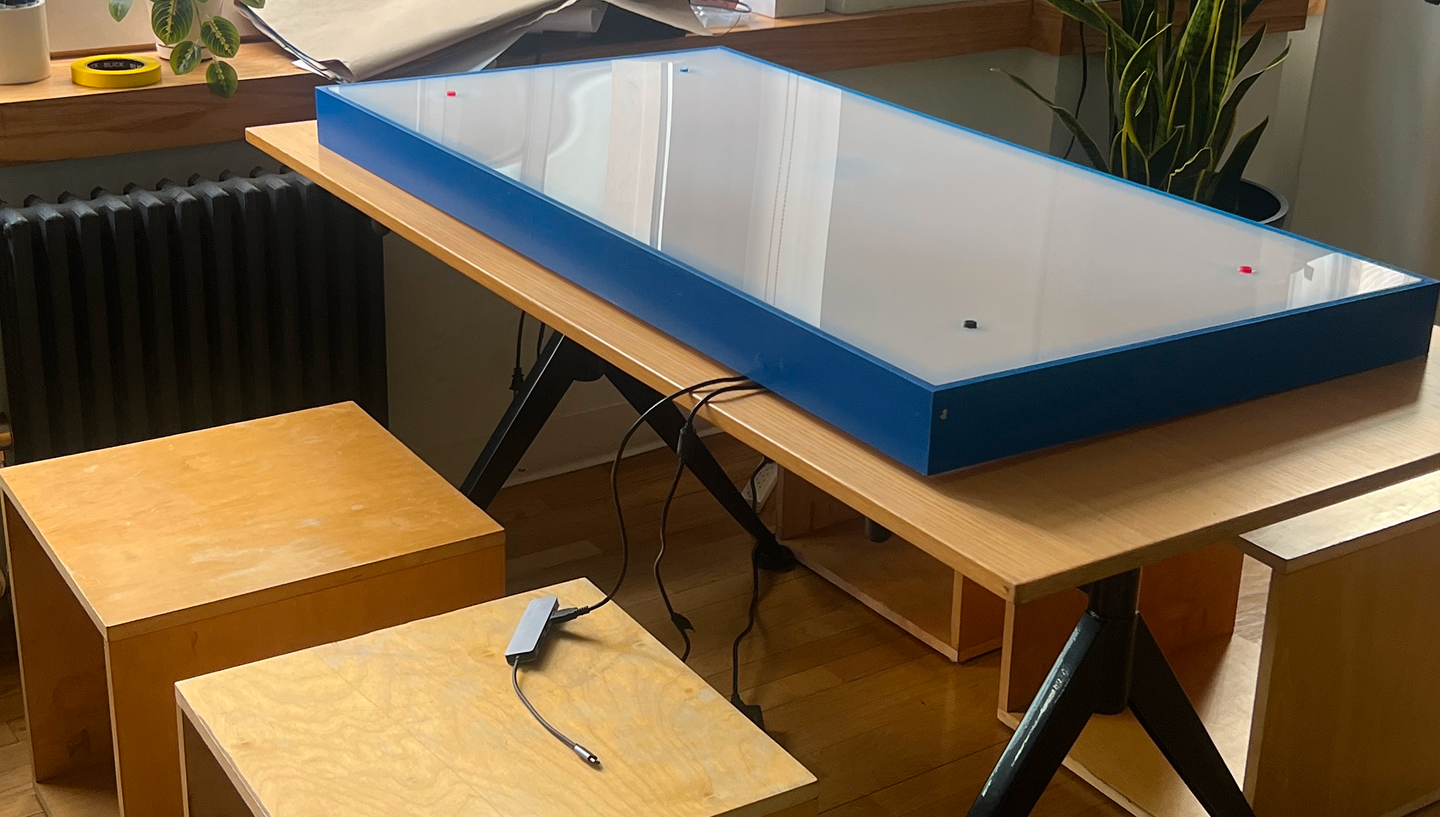
The experience grows with participation. Each participant activates their place by putting their phone face down, triggering a light response that signals their presence. As more people join, the table becomes a shared space for interaction.
Physical prompt cards give participants a starting point for conversation, encouraging them to exchange stories and get to know one another. If someone picks up their phone, only their place resets, while the rest of the table remains active. Each person activates their own place. Together, they create the experience.
Light acts as the visual language of the installation. When a participant places their phone down, their station illuminates, signaling that they are open to interaction. As others join, illuminated lines form across the table, making connections between participants visible and revealing who is ready to engage. The table turns presence into something you can see.
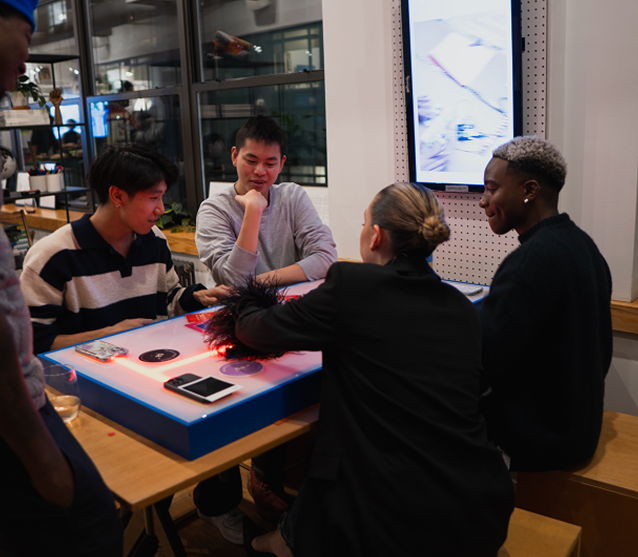
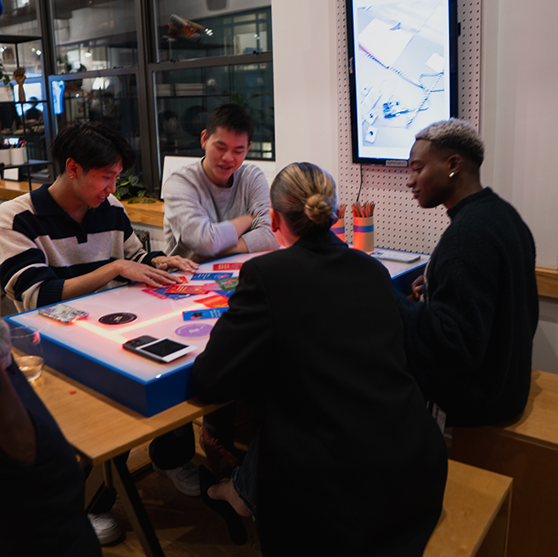
Stranger Stations evolved through iterative prototyping, combining physical computing, lighting, and spatial interaction. We tested different ways of detecting phone presence, visualizing connections through light, and integrating the technology into the table to make the interaction feel intuitive and immediate.
Testing Stranger Stations in real social settings revealed how people discovered the interaction through observation and experimentation. Each iteration helped refine the timing of the lights, the visibility of connections, and the conversation prompts, making the experience easier to understand without adding screens or explicit instructions.
Stranger Stations transforms an ordinary table into a shared space for connection. By making presence visible through light and using technology as a subtle facilitator rather than the focus, the installation creates opportunities for spontaneous conversation and face-to-face interaction.
The system translates a simple physical action into a visible social network. Each phone acts as an input, when placed down, it activates its station and connects it to other active participants through light. As people join or leave, the system continuously updates the network, making the current state of participation visible in real time.