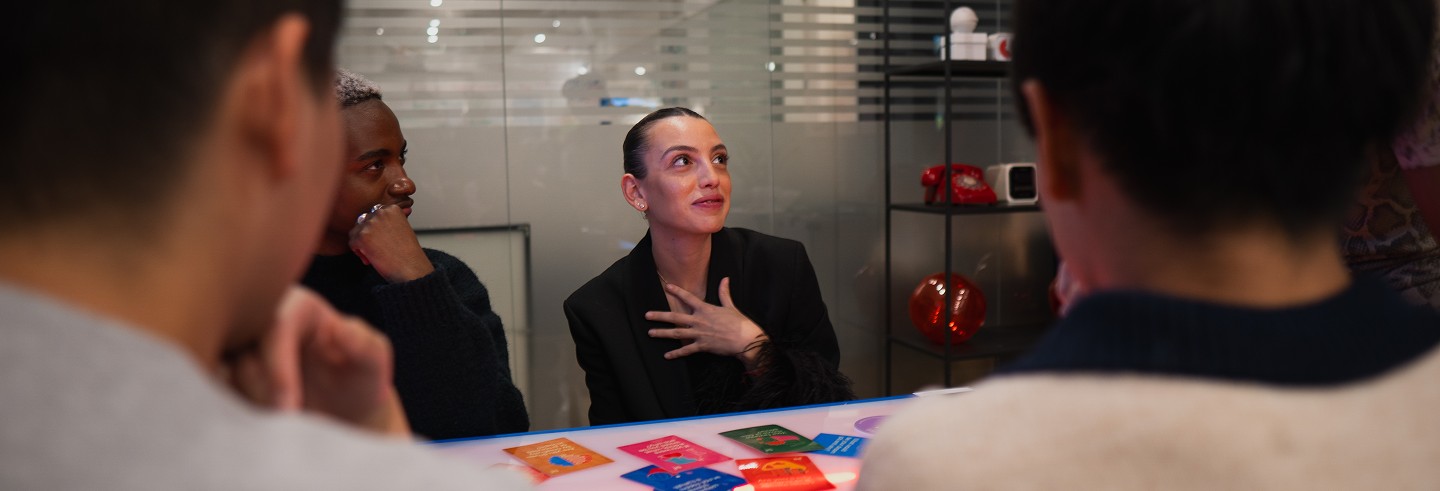
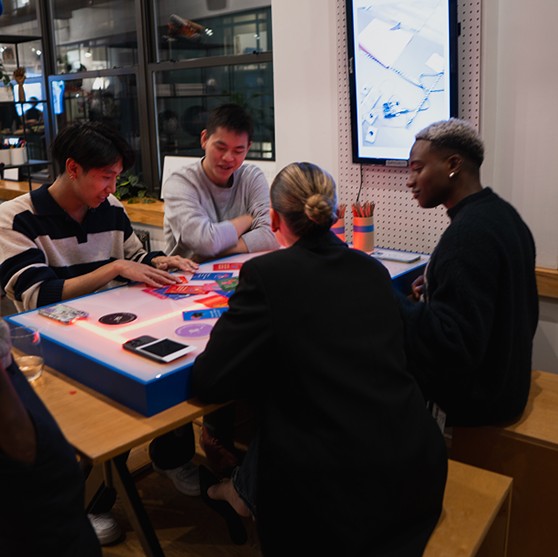
Stranger Stations transforms shared tables into spaces for face-to-face interaction. By combining physical computing, light, and conversation prompts, the installation encourages strangers to step away from their screens and engage with the people around them.
01 / 04
Phones down
Designed for cafés, museums, and campuses, the installation explores how technology can create moments of presence rather than distraction.
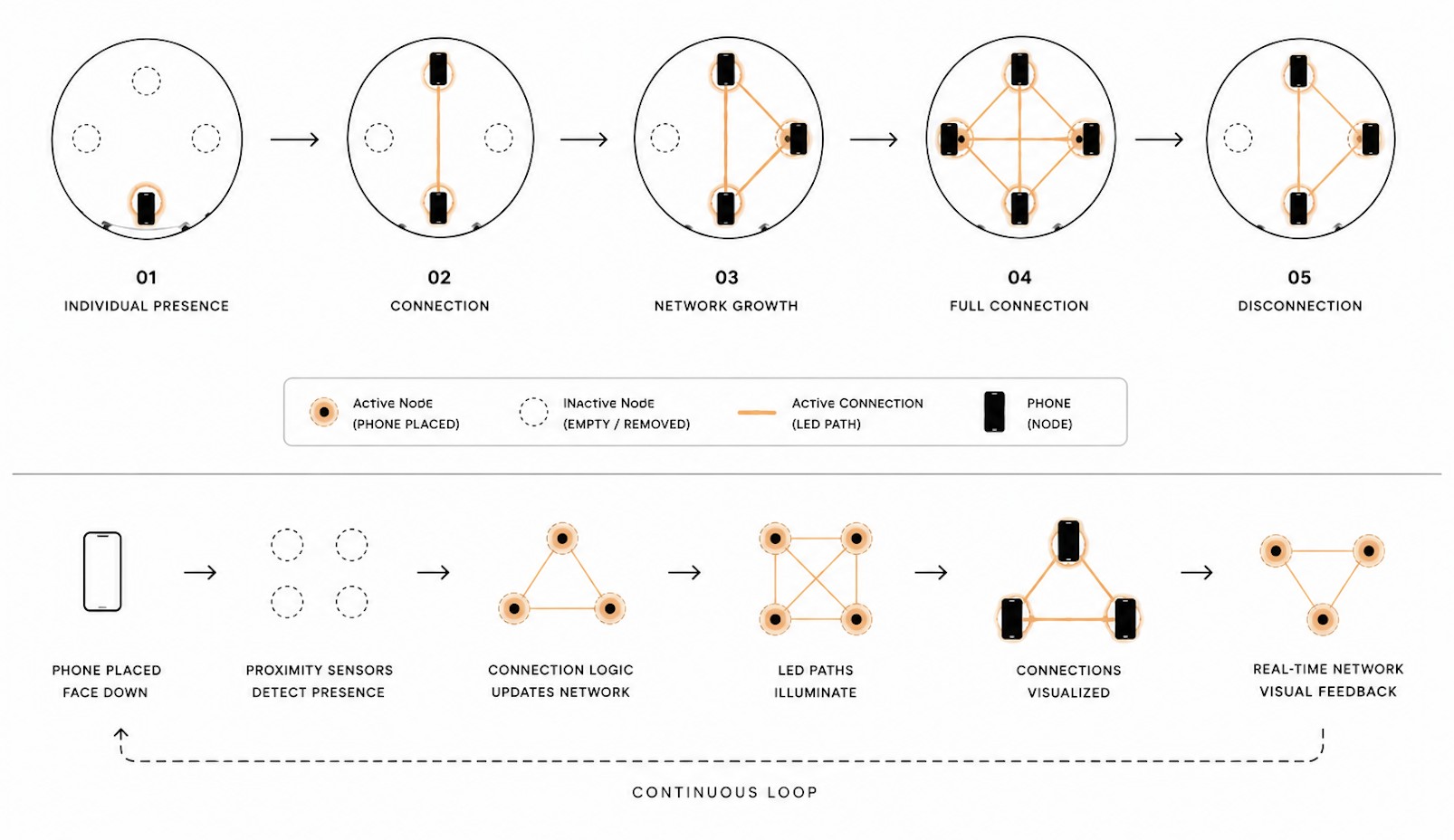
Each participant activates their place by putting their phone down, turning a familiar gesture into an invitation to connect.
02 / 04
Light as language
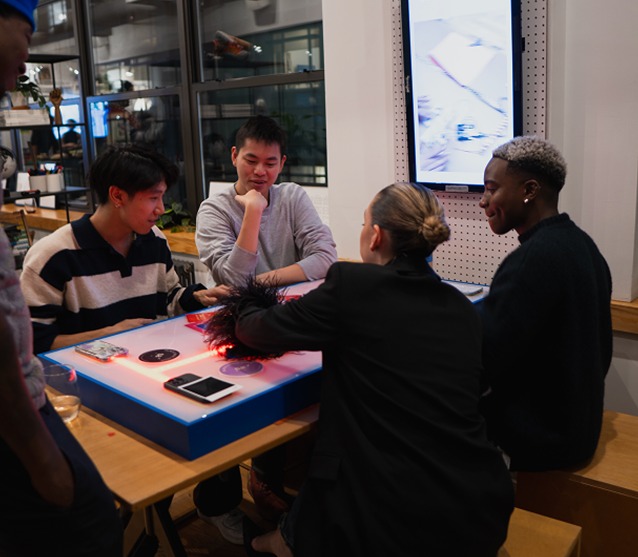
When a participant places their phone face down, their station lights up, signaling that they are open to interaction. As others join, lines of light form across the table, making the connections between participants visible.
The table turns presence into something you can see.
03 / 04
Prototyping
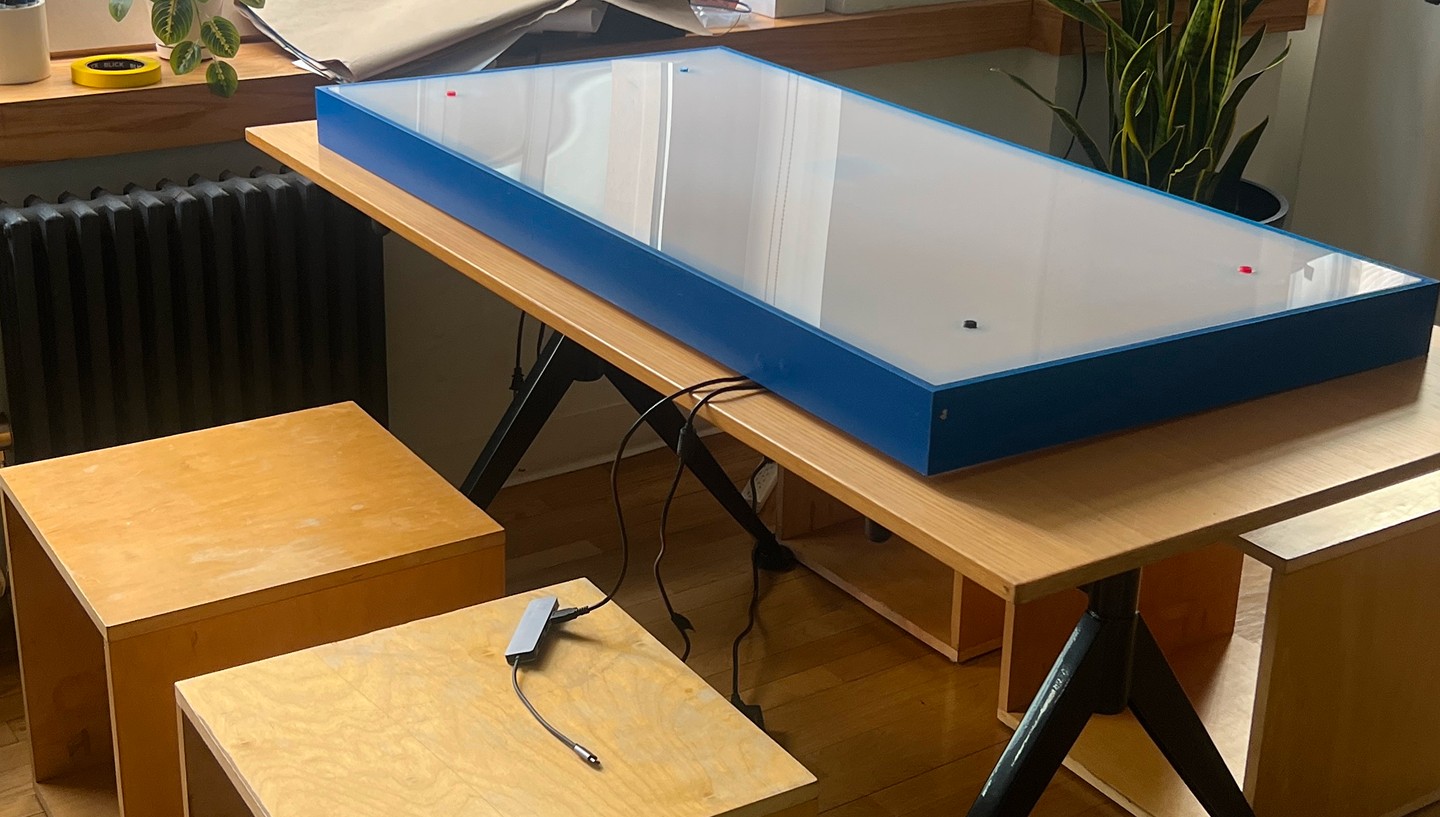
Stranger Stations evolved through iterative prototyping, combining physical computing, lighting, and spatial interaction.
We tested different ways to detect phone presence, visualize connections through light, and build the technology into the table so the interaction feels intuitive and immediate.
04 / 04
Testing
Testing in real social settings showed how participants responded to the table, the light cues, and one another.
Watching these interactions helped us see which signals felt intuitive, when more guidance was needed, and how the conversation prompts supported engagement.
Outcome
Stranger Stations turns an ordinary table into a shared space for connection. By making presence visible through light, and using technology as a quiet facilitator rather than the focus, it creates room for spontaneous, face-to-face conversation.